
THE ALGORITHMIC LAWYER · KNOW YOUR POLICY
Watch the animated explainer: Texco and business interruption
Watch this explainer on YouTube. The animated dialogue is illustrative; read the judgments and case-specific qualifications below.
Texco: Insuring a Basement, Then Invoking a Basement Exclusion
Supreme Court of India · 9 November 2022
a) The Facts: The Insurer Knew the Shop Was in a Basement
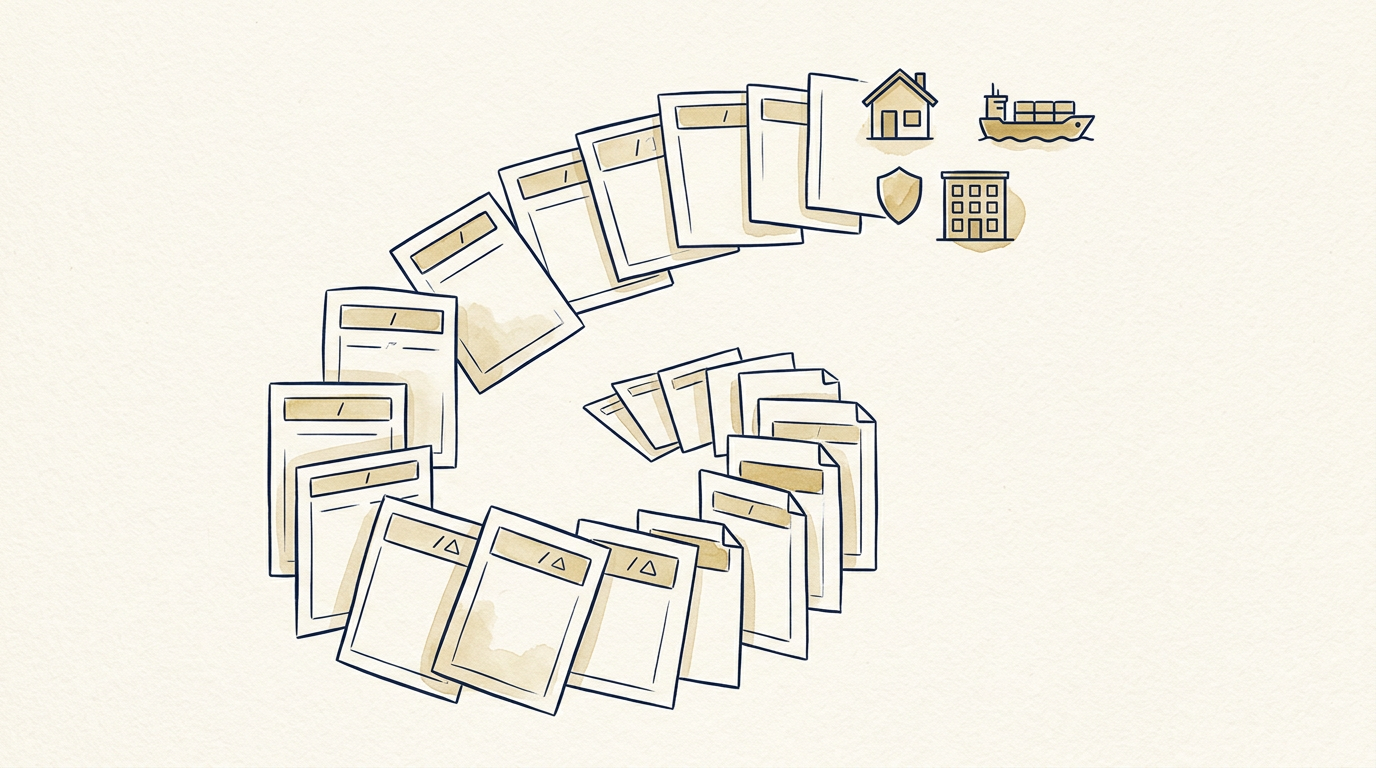
- Texco bought a Standard Fire and Special Perils policy for its basement shop, effective from 28 July 2012 to 27 July 2013. The insurer inspected the shop. After further construction, notice was given and another inspection took place.
- A fire led to a claim. TATA AIG relied on a clause excluding basements, despite the insurer’s recorded knowledge of where the shop was. The State Consumer Commission granted relief; the National Commission overturned that result while granting ₹7.5 lakh. Texco appealed to the Supreme Court.1
b) Both Sides’ Arguments: Could the Basement Clause Defeat the Claim?
- Texco: the National Commission had not overturned the State Commission’s factual and legal reasoning. The consequences of those findings should therefore follow.
- TATA AIG: the basement exclusion existed and the shop was in a basement. It disputed the finding about its knowledge when the contract was made and argued that this was not a basis for restoring the State Commission’s decision.
- The insurer also opposed compensation for harassment or mental agony. The Supreme Court upheld the refusal of that part of the claim.2
c) The Court’s Reasons: Why Knowledge and Conduct Defeated This Refusal

- Could the insurer rely on a basement exclusion in these circumstances, when it knew that the shop it insured was in a basement?
- The main reason for the decision (ratio decidendi): the insurer knew the shop was in a basement. It inspected the shop and arranged the cover, but did not adequately explain the exclusion. Given those facts and its conduct, it could not use that clause to defeat the cover it had knowingly arranged.
- Wider concluding observation (obiter dictum): paragraph 42 cautions insurers generally about compliance with regulations 3 and 4 of the 2002 policyholder-protection rules. This article treats that general caution separately from the reasons deciding Texco’s claim. That is an editorial classification, not a heading used by the Court.
- The decision applied the rules and facts before it. Its discussion of the 2002 regulations is historical; it does not set out every rule governing a newly issued policy today.3
e) The Surveyor’s Findings: Earlier Inspections Confirmed the Insurer’s Knowledge
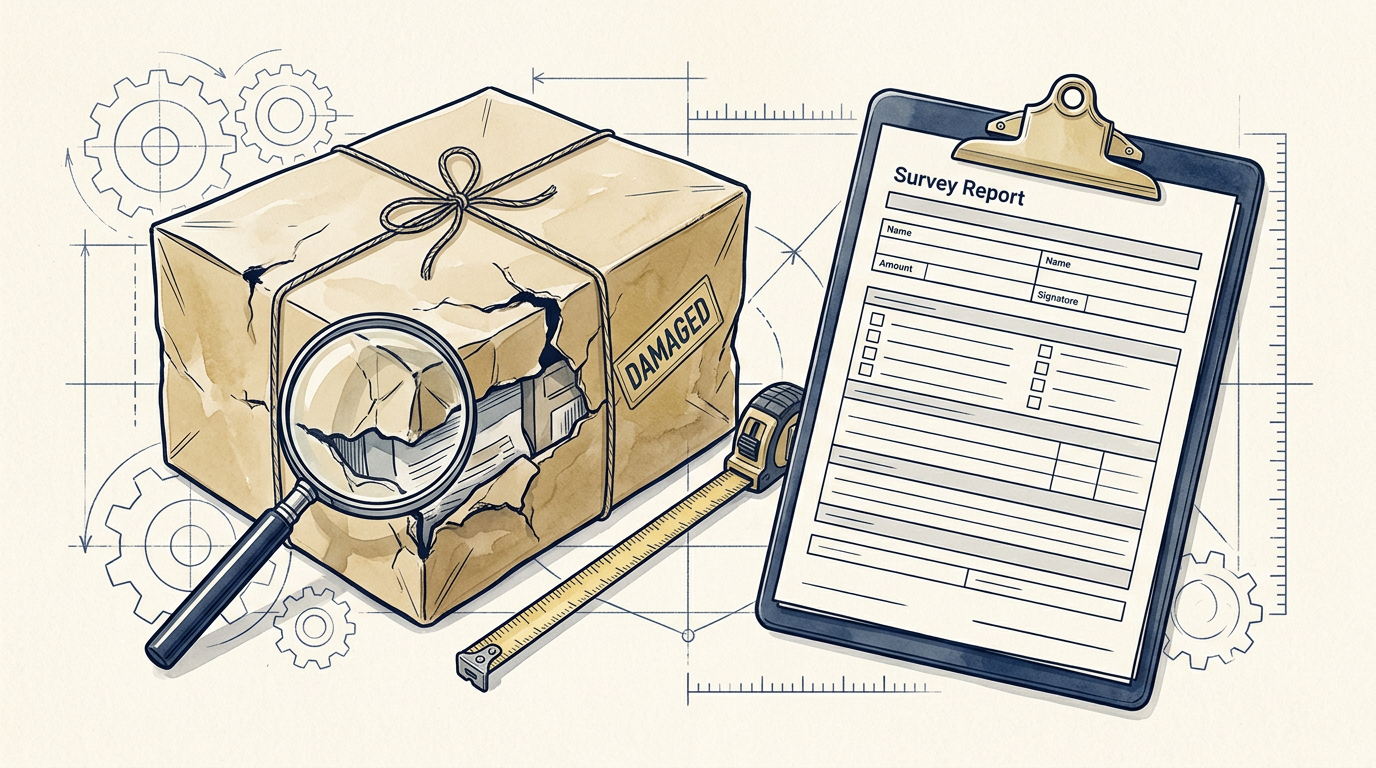
- The judgment records that the insurer’s surveyor inspected the shop after the fire. Texco was asked to refurnish it for evaluation.
- While assessing the sum payable, the surveyor noted earlier inspections and the insurer’s knowledge that the premises were in a basement. That knowledge mattered to the exclusion dispute.
- The State Commission’s approach also required deduction for goods belonging to a third party. The judgment does not reproduce the complete survey report or give a detailed survey calculation.4
f) The Rules: Exclusions, Fair Dealing and Inconsistent Conduct

- An exclusion: a term removing something from the cover. The dispute was about whether this insurer could rely on this exclusion given its knowledge and conduct.
- Good faith: honesty and fair dealing in the insurance relationship. The Court discussed responsibilities on both sides, including communication of important terms.
- Waiver and inconsistent conduct: a party’s actions can affect whether it may later insist on a contractual right. Here, knowingly arranging cover and then invoking the basement clause were central concerns.
- The Court discussed sections 17–19 of the Indian Contract Act, the Consumer Protection Acts of 1986 and 2019, and the 2002 IRDA policyholder-protection regulations. These formed part of its analysis of disclosure, unfair terms and consumer remedies.5
g) The Evidence: Inspections, Policy Terms and What Was Communicated
- The policy, inspections before and after the contract, the surveyor’s recorded observations and the insurer’s knowledge of the basement location were material.
- The Court also considered the inadequate communication of the exclusion and the findings made by the consumer commissions. The documents and conduct—not simply a feeling that the refusal was unfair—supported the result.6
h) Earlier Judgments: Why the Policy’s Purpose and Disclosure Mattered
- Shivram Chandra Jagarnath Cold Storage and B.V. Nagaraju informed the treatment of an exclusion that undermines the contract’s main purpose.
- Manmohan Nanda, M.K.J. Corporation and Modern Insulators addressed good faith and insurance terms. Bharat Watch concerned communication of exclusions.
- N. Murugesan informed the discussion of inconsistent conduct; IREO Grace concerned unfair terms and consumer remedies. These authorities are explained in the Court’s reasoning, not attributed here to advocates whose complete submissions are not reproduced.7
i) The Decision: Texco Succeeded, but Mental-Agony Compensation Did Not
- The Supreme Court set aside the National Commission’s order except for its refusal of ₹2.5 lakh for harassment or mental agony. The appeal succeeded in part.
- The State Commission’s relief was restored subject to that exception. The judgment should not be read as awarding the refused ₹2.5 lakh.8
j) The Lesson: Read the Exclusion Alongside What the Insurer Knew
- The insurer already knew the location of the shop it had agreed to insure. That fact, its inspections and the way the exclusion was communicated explained why the refusal failed.
- The result does not erase every insurance exclusion. It shows why the policy promise, the insurer’s knowledge and its conduct must be considered together.9
FCA v Arch: When a Pandemic Closed Businesses, What Did Cover Mean?
Supreme Court of the United Kingdom · 15 January 2021
a) The Facts: Business Shutdowns Led to a Test of 21 Wordings
- COVID-19 and public-health measures disrupted businesses across the United Kingdom. Many insurers rejected business interruption claims. The Financial Conduct Authority brought a test case to clarify how representative policy wording worked.
- The case began with 21 sample wordings and agreed or assumed facts. It was not a trial of one shop’s accounts or its individual loss. The Supreme Court decided the appeals on 15 January 2021.10
b) Both Sides’ Arguments: Covered Loss or the Wider Pandemic’s Effect?
- The FCA and policyholder representatives: the relevant disease and access-restriction clauses covered losses linked to the pandemic and public measures.
- The insurers: they disputed the meaning of the clauses, the required link between the insured event and the loss, and adjustments to the calculation. They argued that the wider pandemic would have caused losses even without the particular insured event.
- The arguments varied by wording. Disputes included local disease cases, mandatory instructions, partial use of premises and losses arising before a policy trigger.11
c) The Court’s Reasons: How Local Cases and Wider Events Worked Together
- The Court addressed disease clauses, access restrictions, clauses combining both, the causes of loss and how financial adjustments should work.
- The main reasons for the decision (ratio decidendi): for the disease clauses in question, local COVID-19 occurrences could act together with other occurrences as causes of the public measures and loss. The insured occurrence did not have to be the only cause.
- A sufficiently clear mandatory instruction could qualify as a restriction even before it had legal force, where legal compulsion was threatened. Under some wordings, inability to use a separate part of premises or a separate activity could qualify; mere difficulty using premises was not enough.
- A trends adjustment could not take away the promised cover by treating effects of the same underlying insured event as an ordinary reduction in business. The Court also rejected subtracting pre-trigger pandemic downturn on that basis.
- Wider observations (obiter dictum): Lords Briggs and Hodge agreed with the outcome but gave separate concurring reasons on interpretation. Those reasons are kept distinct from the majority’s. No clearly separate obiter passage is isolated here; a separate judicial opinion is not automatically obiter.12
d) The Parties’ Earlier Cases: Why Orient-Express Was Overruled

- The insurers relied on Orient-Express Hotels: even without the insured damage or trigger, they argued, the wider event would still have caused loss.
- The Supreme Court rejected that reasoning for these issues and held Orient-Express wrongly decided. Reporting the insurer’s authority without that treatment would reverse the meaning of this decision.13
f) The Rules: What Triggered Cover, Caused Loss and Shaped the Calculation?
- A trigger: the event the policy says must happen before the cover responds. A fall in sales alone does not establish every trigger.
- Causation: the connection between the insured event and the loss. Several events may act together. Asking whether the loss would have happened without one event is not the only possible test.
- A trends clause: wording used to adjust the comparison between expected and actual business results. It measures the covered loss; it must not remove the cover by putting the insured event back into the comparison as though it were ordinary trading.14
g) The Evidence: Sample Policies, Public Measures and Agreed Facts
- The Court examined the sample policy wording, government statements and measures, and agreed or assumed pandemic facts.
- Those materials supported answers about the policy terms. They did not establish every individual business’s turnover loss or prove every condition for every claim.15
h) Earlier Judgments: What Happens When a Loss Has Several Causes?
- Orient-Express Hotels was overruled in the discussion of causes and financial adjustments.
- The Miss Jay Jay and Wayne Tank helped explain situations involving more than one cause, including the importance of whether a cause is insured, uninsured or expressly excluded.
- The Supreme Court also reviewed the High Court’s decision in this test case. The result and the reasoning must be read against the particular clauses, rather than turned into a promise that every pandemic claim succeeds.16
i) The Decision: The FCA Largely Won, but Individual Claims Still Needed Proof
- The FCA’s appeal was substantially allowed and the insurers’ appeals were dismissed. Lords Briggs and Hodge agreed with the outcome through separate reasons.
- The Court did not award a single payment to all affected businesses. Individual claims still depended on their wording and facts.17
j) The Lesson: A Loss Calculation Must Respect the Cover Promised
- The decision explains why a local insured event can still matter during a much wider crisis. It also explains why a calculation should not remove the very loss the policy promises to cover.
- The starting point remains the contract: what event it covers, how that event caused loss and how the covered loss must be measured.18
Resources and footnotes
- Texco Mktg. Pvt. Ltd. v. TATA AIG Gen. Ins. Co., Civil Appeal No. 8249 of 2022, ¶¶ 1–4 (Sup. Ct. India Nov. 9, 2022). Official judgment. ↩
- Texco Mktg. Pvt. Ltd. v. TATA AIG Gen. Ins. Co., Civil Appeal No. 8249 of 2022, ¶¶ 5–6, 40 (Sup. Ct. India Nov. 9, 2022). Official judgment. ↩
- Texco Mktg. Pvt. Ltd. v. TATA AIG Gen. Ins. Co., Civil Appeal No. 8249 of 2022, ¶¶ 36–42 (Sup. Ct. India Nov. 9, 2022). Official judgment. ↩
- Texco Mktg. Pvt. Ltd. v. TATA AIG Gen. Ins. Co., Civil Appeal No. 8249 of 2022, ¶¶ 2–3 (Sup. Ct. India Nov. 9, 2022). Official judgment. ↩
- Texco Mktg. Pvt. Ltd. v. TATA AIG Gen. Ins. Co., Civil Appeal No. 8249 of 2022, ¶¶ 11–35 (Sup. Ct. India Nov. 9, 2022). Official judgment. ↩
- Texco Mktg. Pvt. Ltd. v. TATA AIG Gen. Ins. Co., Civil Appeal No. 8249 of 2022, ¶¶ 1–4, 36–41 (Sup. Ct. India Nov. 9, 2022). Official judgment. ↩
- Texco Mktg. Pvt. Ltd. v. TATA AIG Gen. Ins. Co., Civil Appeal No. 8249 of 2022, ¶¶ 11–35 (Sup. Ct. India Nov. 9, 2022). Authorities discussed there: Shivram Chandra Jagarnath Cold Storage v. New India Assurance Co., (2022) 4 S.C.C. 539 (India); B.V. Nagaraju v. Oriental Ins. Co., (1996) 4 S.C.C. 647 (India); Manmohan Nanda v. United India Assurance Co., (2022) 4 S.C.C. 582 (India); United India Ins. Co. v. M.K.J. Corp., (1996) 6 S.C.C. 428 (India); Modern Insulators Ltd. v. Oriental Ins. Co., (2000) 2 S.C.C. 734 (India); Bharat Watch Co. v. Nat’l Ins. Co., (2019) 6 S.C.C. 212 (India); Union of India v. N. Murugesan, (2022) 2 S.C.C. 25 (India); IREO Grace Realtech Pvt. Ltd. v. Abhishek Khanna, (2021) 3 S.C.C. 241 (India).. Official judgment. ↩
- Texco Mktg. Pvt. Ltd. v. TATA AIG Gen. Ins. Co., Civil Appeal No. 8249 of 2022, ¶¶ 40–42 (Sup. Ct. India Nov. 9, 2022). Official judgment. ↩
- Texco Mktg. Pvt. Ltd. v. TATA AIG Gen. Ins. Co., Civil Appeal No. 8249 of 2022, ¶¶ 36–42 (Sup. Ct. India Nov. 9, 2022). Official judgment. ↩
- Fin. Conduct Auth. v. Arch Ins. (UK) Ltd., [2021] UKSC 1, ¶¶ 1–5 (appeal taken from Eng.). Official judgment. ↩
- Fin. Conduct Auth. v. Arch Ins. (UK) Ltd., [2021] UKSC 1, ¶¶ 48–159, 160–312 (appeal taken from Eng.). Official judgment. ↩
- Fin. Conduct Auth. v. Arch Ins. (UK) Ltd., [2021] UKSC 1, ¶¶ 48–159, 160–296, 314–326 (appeal taken from Eng.). Official judgment. ↩
- Fin. Conduct Auth. v. Arch Ins. (UK) Ltd., [2021] UKSC 1, ¶¶ 297–312 (appeal taken from Eng.). Official judgment. ↩
- Fin. Conduct Auth. v. Arch Ins. (UK) Ltd., [2021] UKSC 1, ¶¶ 48–95, 160–296 (appeal taken from Eng.). Official judgment. ↩
- Fin. Conduct Auth. v. Arch Ins. (UK) Ltd., [2021] UKSC 1, ¶¶ 1–47 (appeal taken from Eng.). Official judgment. ↩
- Fin. Conduct Auth. v. Arch Ins. (UK) Ltd., [2021] UKSC 1, ¶¶ 160–250, 297–312 (appeal taken from Eng.). Authorities discussed there: Orient-Express Hotels Ltd. v. Assicurazioni Generali S.p.A., [2010] EWHC 1186 (Comm), overruled by FCA v. Arch, [2021] UKSC 1, ¶¶ 297–312; The Miss Jay Jay, [1987] 1 Lloyd’s Rep. 32; Wayne Tank & Pump Co. v. Employers Liab. Assurance Corp., [1974] Q.B. 57; Fin. Conduct Auth. v. Arch Ins. (UK) Ltd., [2020] EWHC 2448 (Comm).. Official judgment. ↩
- Fin. Conduct Auth. v. Arch Ins. (UK) Ltd., [2021] UKSC 1, ¶¶ 312–326 (appeal taken from Eng.). Official judgment. ↩
- Fin. Conduct Auth. v. Arch Ins. (UK) Ltd., [2021] UKSC 1, ¶¶ 160–296 (appeal taken from Eng.). Official judgment. ↩
Credits: source courts and judicial authors are credited in the notes. GravityWrite assisted with article drafting and heading suggestions, and generated the conceptual illustrations; the text was edited and checked against the cited records. Earlier cases are described as discussed in those judgments; independent full-text checks of every earlier authority are not claimed. Illustrations are not photographs of the events, court documents or evidence. By The Algorithmic Lawyer.
Explore more animated case studies and source articles in The Algorithmic Lawyer’s Insurance Claims Video Library.