Employees Compensation Act Basics: What No One Tells New Hires
Starting a new job comes with a lot of paperwork, orientation sessions, and information overload. Somewhere in that pile, your rights under the Employees Compensation Act, 1923 quietly get buried — or skipped entirely.
This guide is for new hires, first-time employees, and anyone who’s never had someone sit down and actually explain what happens if you get hurt at work. No legal jargon, no fluff — just the stuff that actually matters to you.
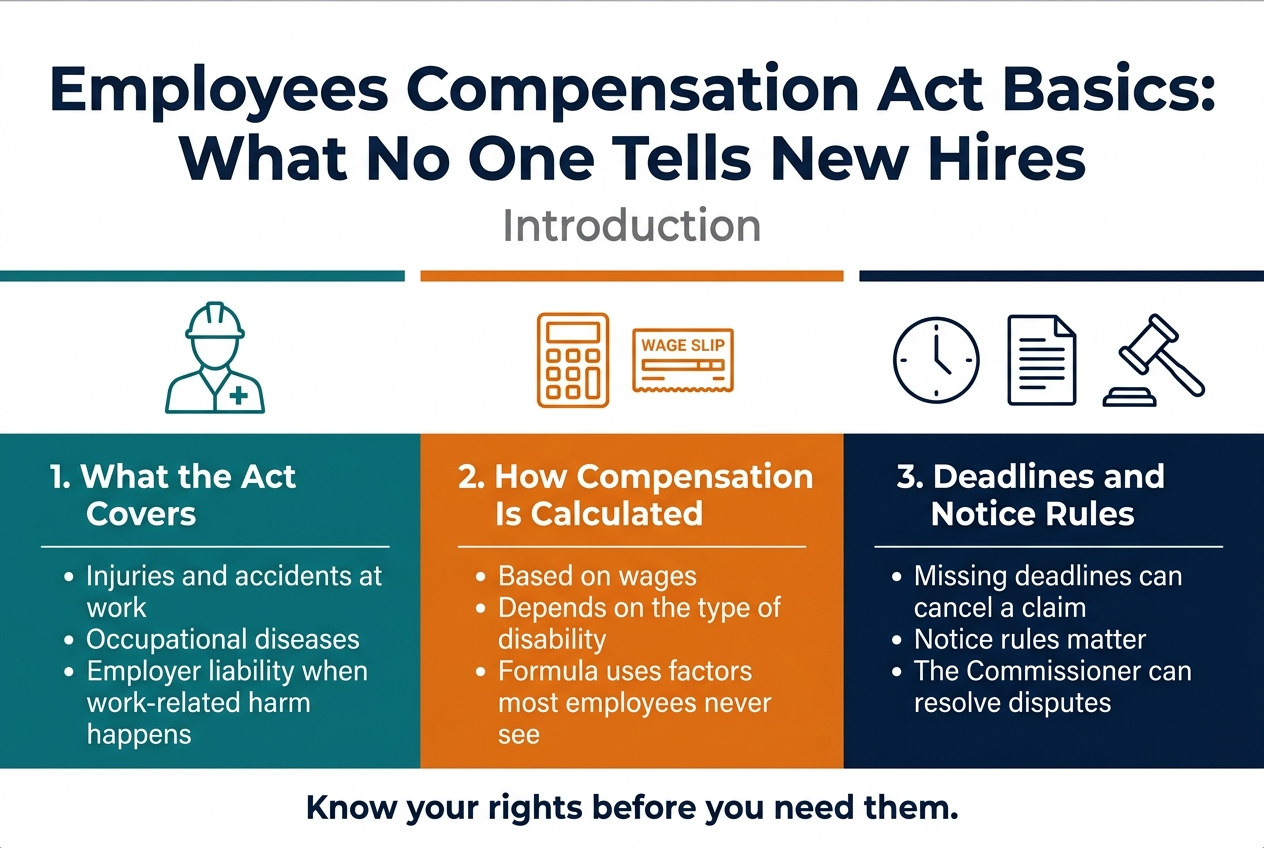
Here’s what we’ll break down:
- What the Act actually covers — including which injuries, accidents, and occupational diseases qualify, and when your employer is legally on the hook
- How compensation amounts get calculated — because the formula involves your wages, the type of disability, and a few numbers most employees never see coming
- The deadlines and notice rules that can quietly cancel your claim if you miss them — and what the Commissioner can do when disputes land in their lap
Whether you’ve been on the job for a week or just signed your offer letter, knowing these basics could make a real difference when it counts most.
What the Employees Compensation Act Actually Covers
A. The Hidden Truth About Who Qualifies as an Eligible Employee
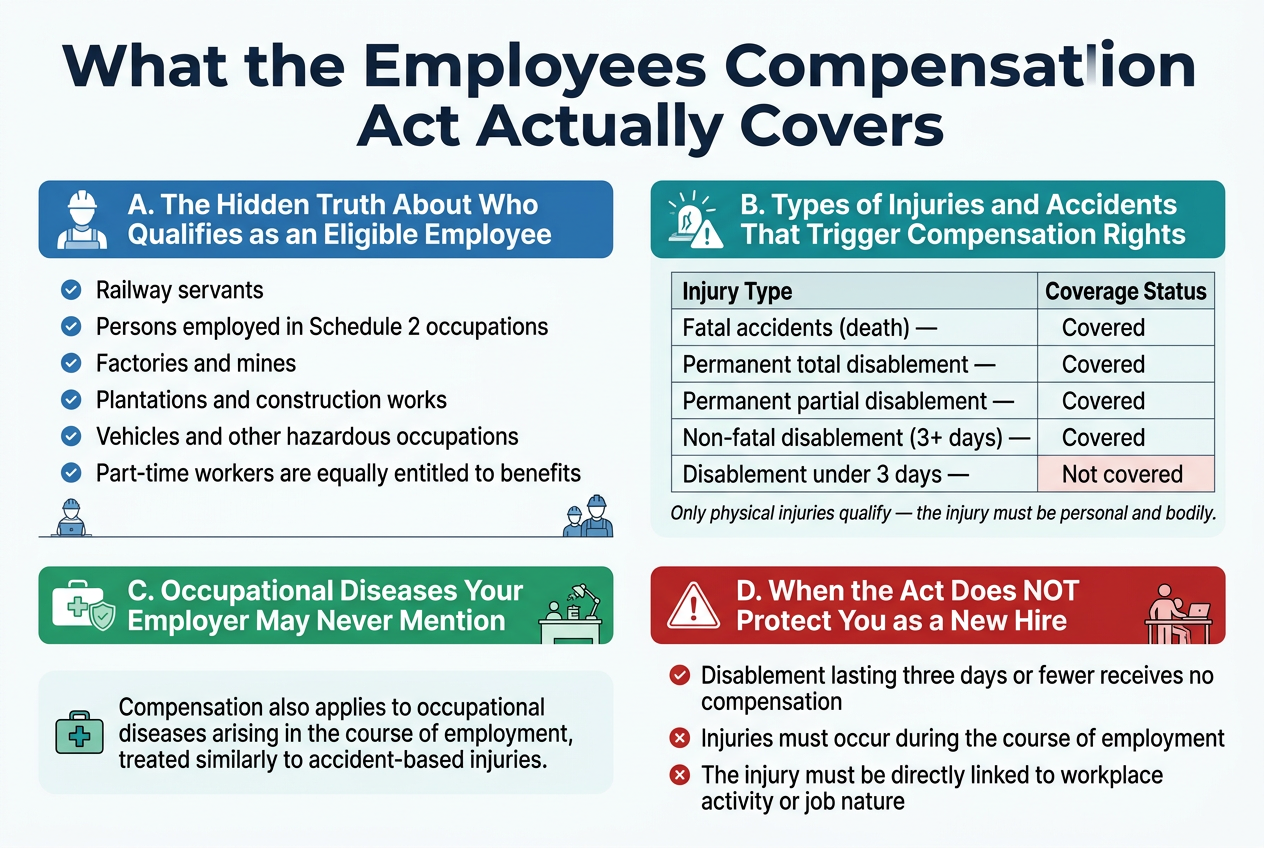
The Act covers railway servants and persons employed in capacities listed under Schedule 2, including workers in:
- Factories and mines
- Plantations and construction works
- Vehicles and other hazardous occupations
- Part-time workers are equally entitled to benefits
B. Types of Injuries and Accidents That Trigger Compensation Rights
Eligible injuries include:
| Injury Type | Coverage Status |
|---|---|
| Fatal accidents (death) | Covered |
| Permanent total disablement | Covered |
| Permanent partial disablement | Covered |
| Non-fatal disablement (3+ days) | Covered |
| Disablement under 3 days | Not covered |
Only physical injuries qualify — the injury must be personal and bodily.
C. Occupational Diseases Your Employer May Never Mention
Compensation also applies to occupational diseases arising in the course of employment, treating them similarly to accident-based injuries.
D. When the Act Does NOT Protect You as a New Hire
With this in mind, understand these key exclusions:
- Disablement lasting three days or fewer receives no compensation
- Injuries must occur during the course of employment
- The injury must be directly linked to workplace activity or job nature
Your Employer’s Real Liability Under the Act
How Vicarious Liability Works in Your Favor
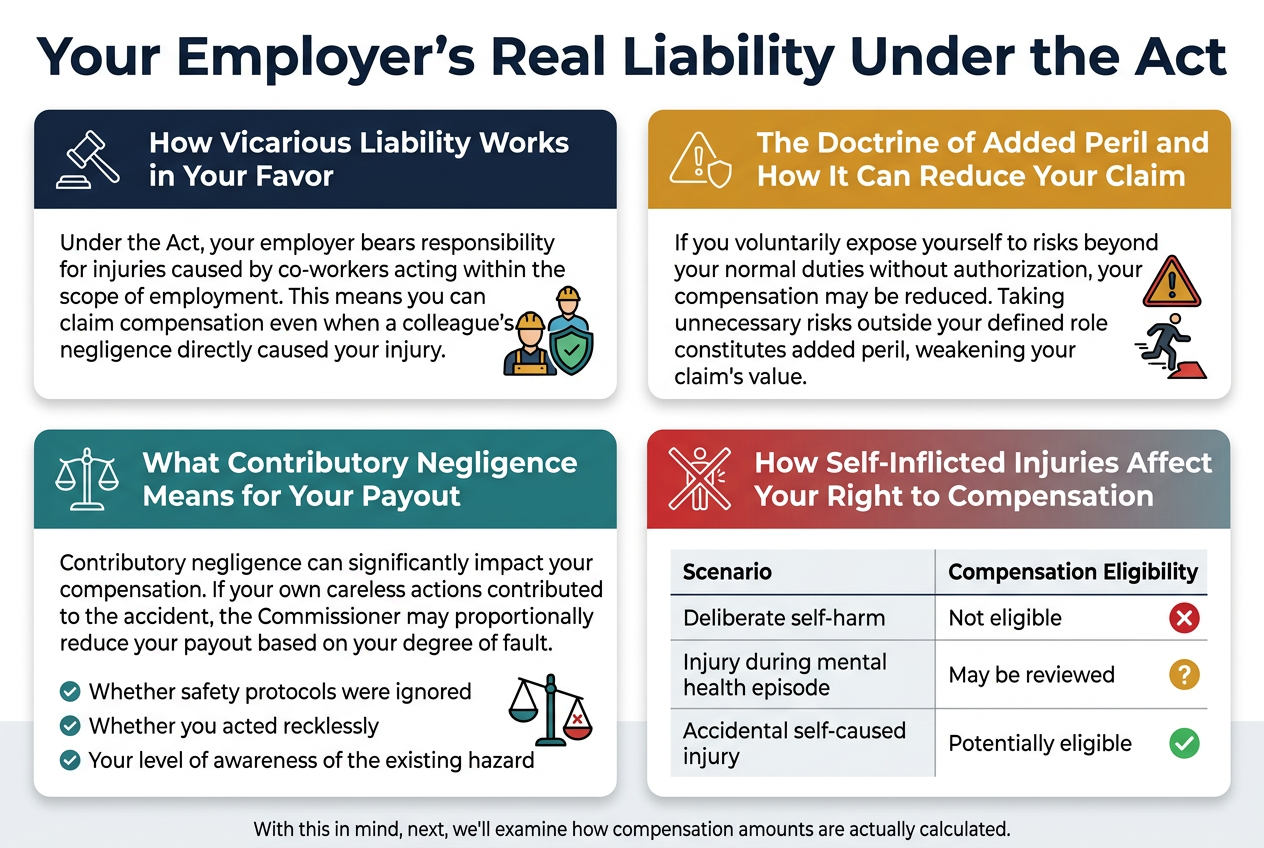
Under the Act, your employer bears responsibility for injuries caused by co-workers acting within the scope of employment. This means you can claim compensation even when a colleague’s negligence directly caused your injury.
The Doctrine of Added Peril and How It Can Reduce Your Claim
If you voluntarily expose yourself to risks beyond your normal duties without authorization, your compensation may be reduced. Taking unnecessary risks outside your defined role constitutes added peril, weakening your claim’s value.
What Contributory Negligence Means for Your Payout
Contributory negligence can significantly impact your compensation. If your own careless actions contributed to the accident, the Commissioner may proportionally reduce your payout based on your degree of fault. Key considerations include:
- Whether safety protocols were ignored
- Whether you acted recklessly
- Your level of awareness of the existing hazard
How Self-Inflicted Injuries Affect Your Right to Compensation
Self-inflicted injuries generally disqualify you from receiving compensation under the Act. However, important distinctions apply:
| Scenario | Compensation Eligibility |
|---|---|
| Deliberate self-harm | Not eligible |
| Injury during mental health episode | May be reviewed |
| Accidental self-caused injury | Potentially eligible |
With this in mind, next, we’ll examine how compensation amounts are actually calculated.
How Compensation Amounts Are Actually Calculated
The Formula Used for Death-Related Compensation
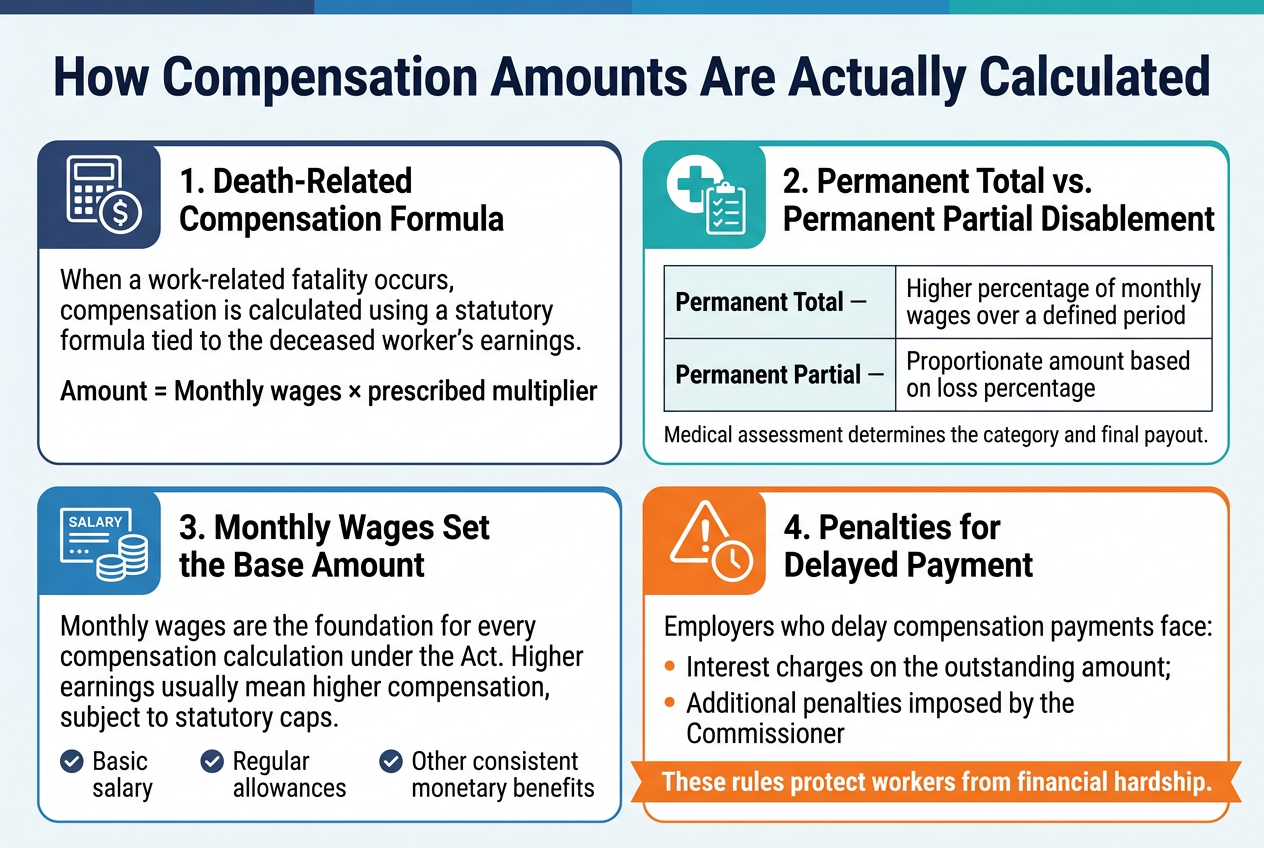
When a work-related fatality occurs, compensation is calculated based on a statutory formula tied directly to the deceased worker’s earnings. The amount typically reflects a multiplier applied to monthly wages, subject to prescribed limits.
Permanent Total vs. Permanent Partial Disablement Payouts
| Disablement Type | Compensation Basis |
|---|---|
| Permanent Total | Higher percentage of monthly wages over a defined period |
| Permanent Partial | Proportionate amount based on loss percentage |
The degree of disablement is assessed medically and determines which category applies, directly impacting the final payout.
How Your Monthly Wages Determine Your Compensation Amount
Your monthly wages serve as the foundation for every compensation calculation under the Act. Higher earnings generally translate to higher compensation, though statutory caps may apply. Wages typically include:
- Basic salary
- Regular allowances
- Other consistent monetary benefits
Penalties Your Employer Faces for Delaying Payment
With this in mind, the Act does not permit employers to delay payments without consequence. Employers who fail to pay compensation on time face:
- Interest charges on the outstanding amount
- Additional penalties imposed by the Commissioner
These provisions protect workers from financial hardship caused by unjustified delays in receiving rightful compensation.
Critical Deadlines and Notice Requirements New Hires Miss
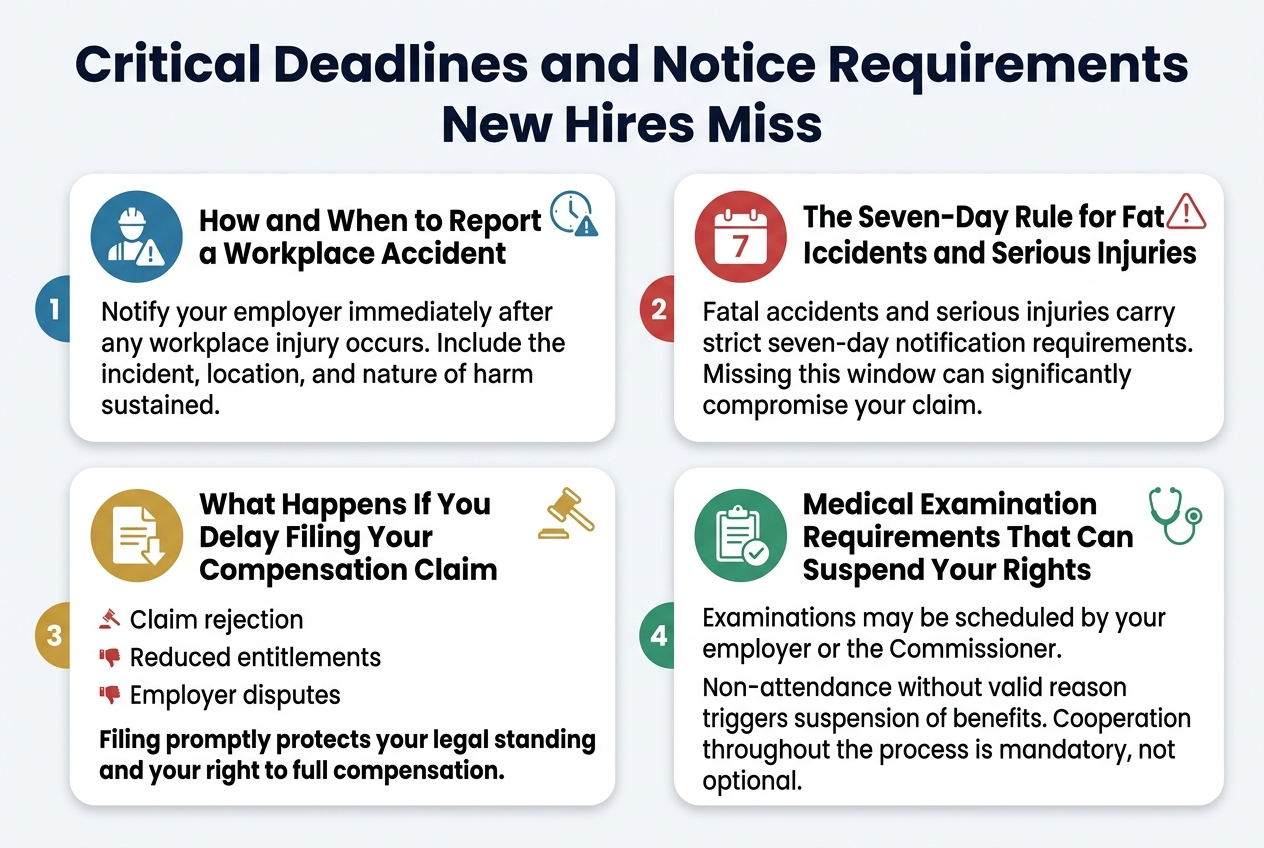
How and When to Report a Workplace Accident
Prompt reporting is foundational to protecting your compensation rights. Notify your employer immediately after any workplace injury occurs, providing clear details about the incident, location, and nature of harm sustained.
The Seven-Day Rule for Fatal Accidents and Serious Injuries
With this in mind, timing is critical for severe cases. Fatal accidents and serious injuries carry strict seven-day notification requirements. Missing this window can significantly compromise your claim before it begins.
What Happens If You Delay Filing Your Compensation Claim
Previously, many workers assumed flexibility existed around filing timelines — it does not. Delays in submitting your formal compensation claim can result in:
- Claim rejection based on procedural non-compliance
- Reduced entitlements due to lapsed deadlines
- Employer disputes citing lack of timely notice as grounds for denial
Filing promptly protects both your legal standing and your right to full compensation.
Medical Examination Requirements That Can Suspend Your Rights
Now that we have covered filing timelines, understand that medical examination compliance is equally binding. Failing to attend required medical examinations can legally suspend your compensation payments. Key points include:
- Examinations may be scheduled by your employer or the Commissioner
- Non-attendance without valid reason triggers suspension of benefits
- Cooperation throughout the process is mandatory, not optional
Special Compensation Situations That Affect Your Rights
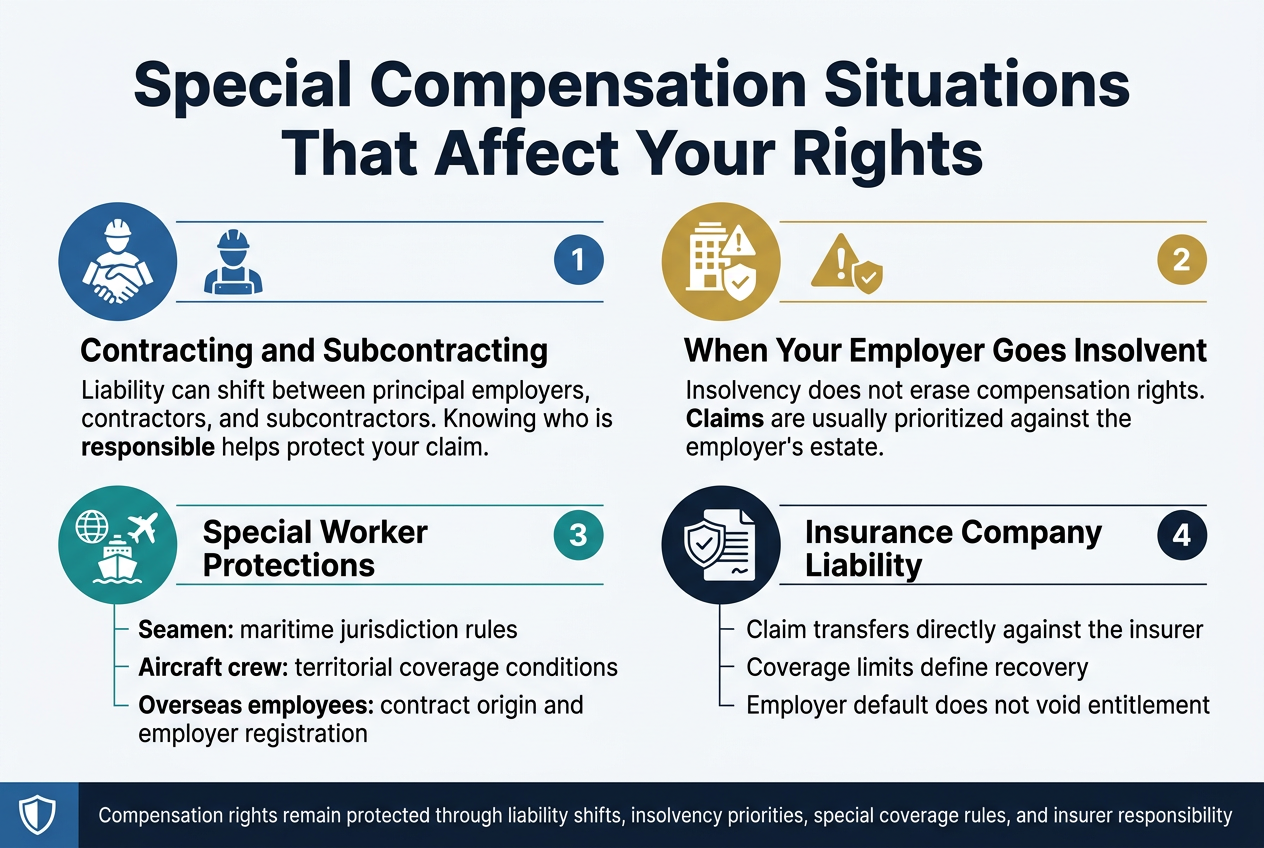
How Contracting and Subcontracting Arrangements Impact Your Claim
When principal employers engage contractors, liability for worker compensation can shift between parties. Understanding who bears responsibility protects your claim from being dismissed on technical grounds.
What Happens to Your Compensation If Your Employer Goes Insolvent
With this in mind, insolvency doesn’t extinguish your compensation rights. Statutory frameworks typically prioritize compensation claims, treating them as secured obligations against the employer’s estate rather than ordinary unsecured debts.
Protections for Seamen, Aircraft Crew, and Overseas Employees
Previously, coverage gaps left maritime and aviation workers vulnerable. Now that we have covered standard employment scenarios, specialized provisions address:
- Seamen operating under distinct maritime jurisdiction rules
- Aircraft crew subject to specific territorial coverage conditions
- Overseas employees whose claims depend on contract origin and employer registration
How Insurance Company Liability Protects You When Employers Default
Now that we have covered insolvency risks, insurance mechanisms serve as a critical safety net. When employers fail to pay, insurers carrying the employer’s policy step into direct liability, meaning:
- Your claim transfers directly against the insurer
- Coverage limits define the maximum recoverable amount
- Default by the employer does not void your entitlement to compensation
The Role of the Commissioner and Your Legal Options
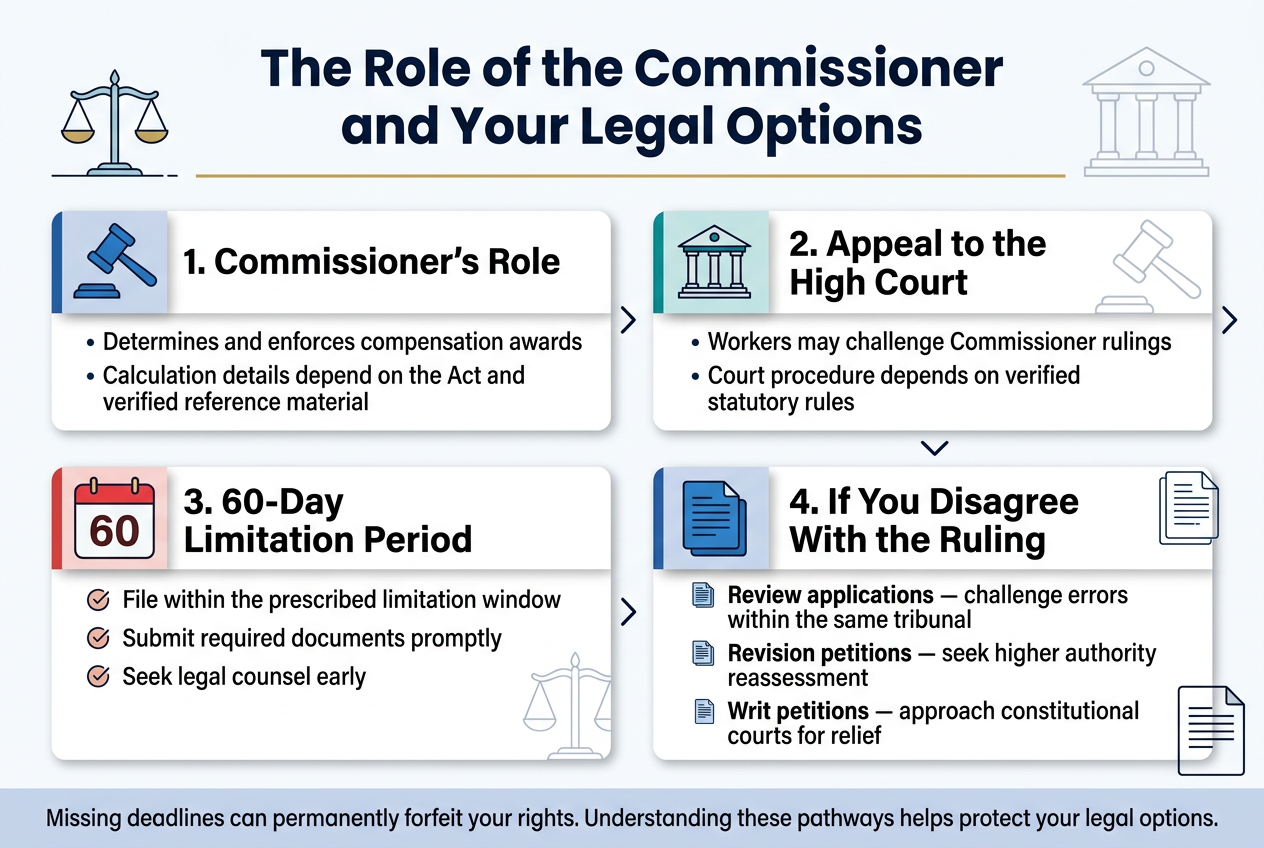
How the Commissioner Calculates and Enforces Compensation Awards
The Commissioner plays a central role in determining and enforcing compensation under the Act. However, since no specific reference details were available, this section cannot accurately outline the Commissioner’s precise calculation methodology without risking misinformation.
Your Right to Appeal a Compensation Decision to the High Court
Similarly, workers generally retain the right to challenge Commissioner rulings through higher judicial channels, though specific procedural details require verified statutory reference to present accurately.
The 60-Day Limitation Period for Filing an Appeal
Missing appeal deadlines can permanently forfeit your rights. Key considerations typically include:
- Filing within the prescribed limitation window
- Submitting required documentation promptly
- Seeking legal counsel early to avoid procedural errors
Review, Revision, and Writ Options When You Disagree With a Ruling
With this in mind, workers who disagree with a ruling may explore multiple legal avenues:
- Review applications — challenging errors within the same tribunal
- Revision petitions — seeking higher authority reassessment
- Writ petitions — approaching constitutional courts for relief
Previously, we covered compensation calculations and special situations. Now that we have covered your legal options, understanding these pathways ensures your rights remain fully protected throughout the process.
Rights That Protect Your Compensation Payment
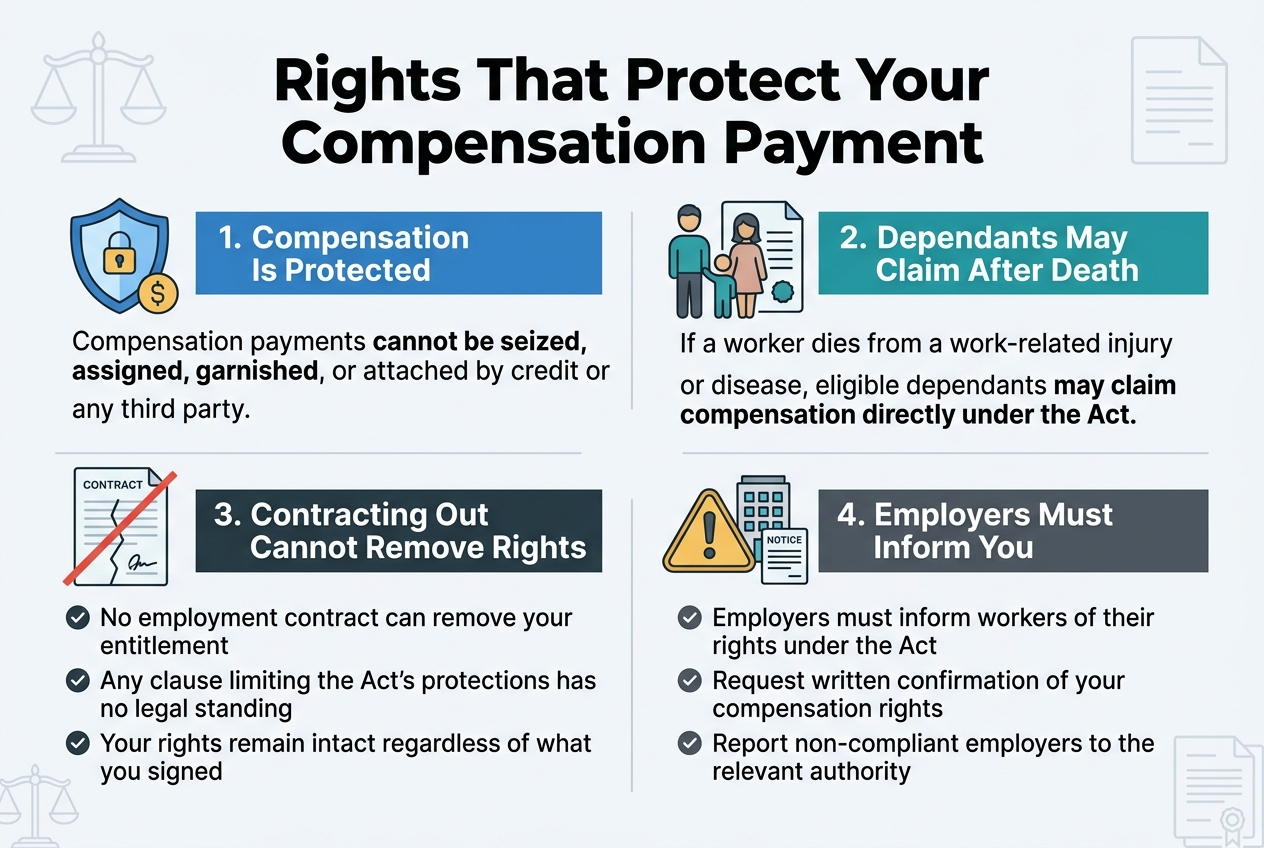
A. Why Your Compensation Cannot Be Seized, Assigned, or Attached
Compensation payments are legally protected from creditors, meaning they cannot be garnished, assigned, or attached by any third party.
B. How Dependants and Family Members Claim Compensation After a Death
When a worker dies from a work-related injury or disease, eligible dependants — including spouses, children, and other qualifying family members — may claim compensation directly under the Act.
C. What Contracting Out Means and Why It Cannot Strip Your Rights
“Contracting out” refers to agreements between employers and employees that attempt to waive or reduce statutory compensation rights. Such agreements are void and unenforceable under the Act. Key points:
- No employment contract can legally remove your entitlement
- Any clause attempting to limit the Act’s protections has no legal standing
- Your rights remain intact regardless of what you signed
D. Penalties Employers Face for Failing to Inform You of Your Rights
Employers are legally obligated to inform workers of their rights under the Act. Failure to do so exposes them to penalties. With this in mind, workers should:
- Request written confirmation of their compensation rights
- Report non-compliant employers to the relevant authority
- Understand that ignorance of the law does not excuse employer violations
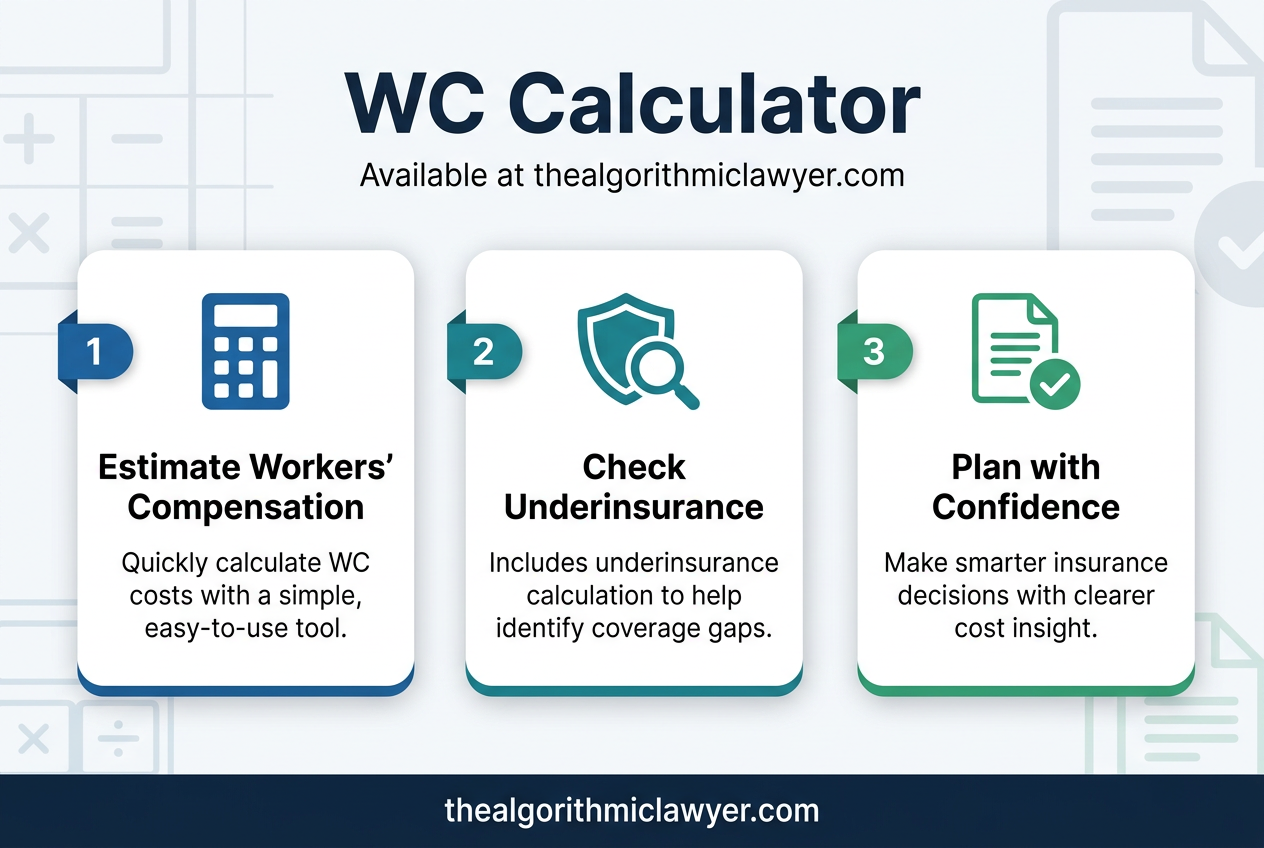
Stop Guessing — Calculate It Yourself
Figuring out your exact compensation entitlement under the Employees Compensation Act doesn’t have to feel like solving a puzzle in the dark. The free workers’ compensation calculator at The Algorithmic Lawyer does the heavy lifting for you.
What Makes This Calculator Different
Most online tools give you a rough ballpark. This one goes deeper:
- Standard compensation calculations based on your earnings and degree of incapacity
- Underinsurance calculations — a feature almost no other tool includes, which matters when your employer’s insurance coverage falls short of the statutory minimum
- Instant results without needing a lawyer on speed dial for basic estimates
Why the Underinsurance Feature Actually Matters
When an employer is underinsured, the compensation math gets complicated fast. The Act still protects you, but the numbers shift depending on the actual insured amount versus what should have been covered. Getting this wrong means leaving money on the table.
| Scenario | Standard Calculator | The Algorithmic Lawyer |
|---|---|---|
| Full coverage | ✅ | ✅ |
| Underinsurance gap | ❌ | ✅ |
Run your numbers before you sign anything or accept any settlement offer.
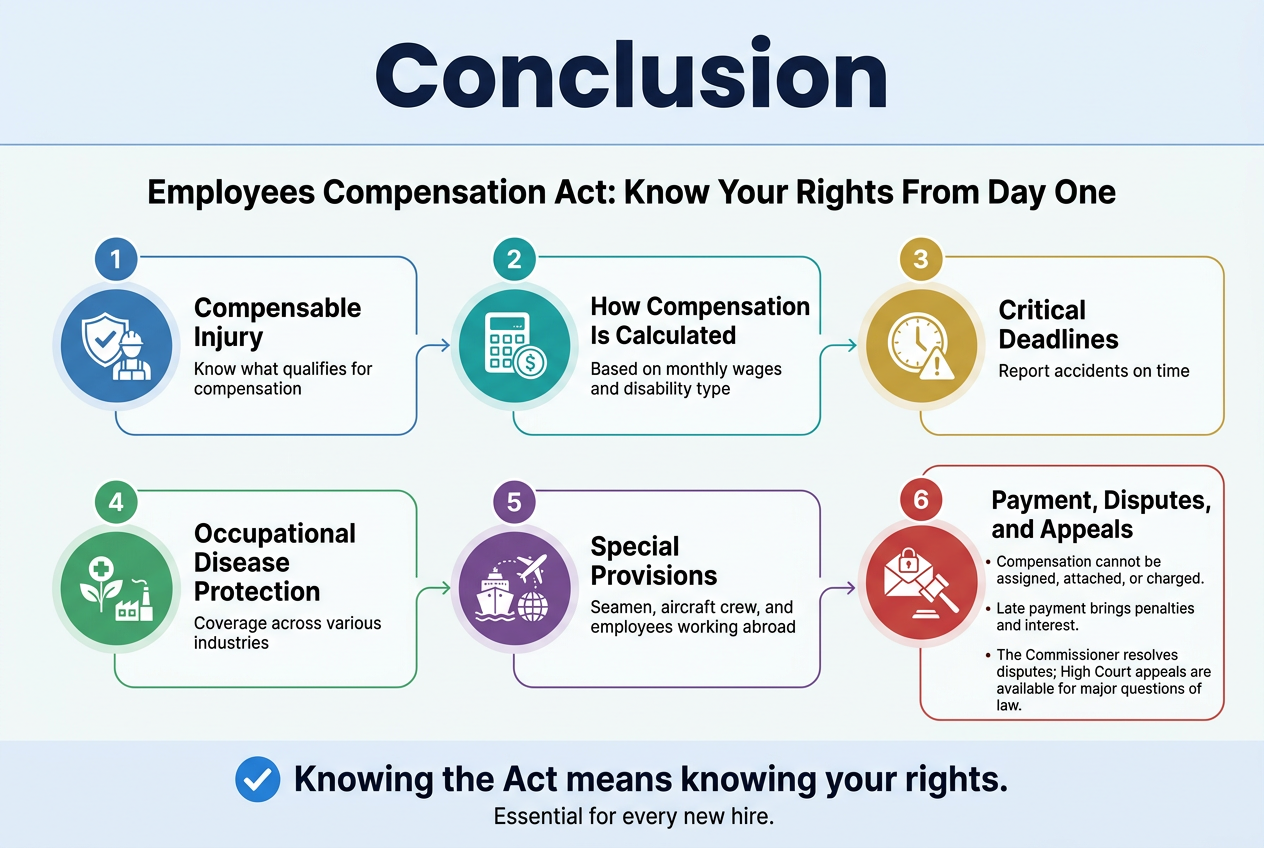
The Employees Compensation Act is far more comprehensive than most new hires realize. From understanding what qualifies as a compensable injury to knowing how compensation amounts are calculated based on monthly wages and disability type, the Act establishes clear protections that every worker should be aware of from day one. Critical deadlines for reporting accidents, occupational disease protections across various industries, and special provisions for seamen, aircraft crew, and employees working abroad all form part of a framework designed to ensure no worker is left without recourse after a workplace injury.
Equally important is knowing your rights when it comes to receiving payment — compensation cannot be assigned, attached, or charged, and your employer faces penalties and interest charges for failing to pay on time. If disputes arise, the Commissioner plays a central role in resolving them, and appeals to the High Court remain an option when substantial questions of law are involved. As a new hire, taking the time to understand these protections is not just advisable — it is essential. Knowing the Act means knowing your rights, and that knowledge can make a significant difference when you need it most.